

No products in the cart.
Blog
How to Choose the Right Paddle Mixer!
25
Jan
Jan
If you’re in the market for a paddle mixer to mix liquid & powdered building materials, you may be feeling overwhelmed by the vast number of options available. It’s important to choose the right paddle mixer to ensure you get the job done right.
In this blog, we’ll provide some tips to help you make an informed decision and choose the right paddle mixer for your mixing needs. Read on to find out more!
Consider the size:
When selecting the right paddle mixer for paint plaster grout needs, size should be one of the most important factors in your decision-making process.
A mixer that is too small won’t be able to properly mix large batches of plaster, and a mixer that is too large could cause problems with maneuverability or storage.
If you are using a stationary paddle mixer, you will need to make sure that the mixer’s footprint is not too large for the space in which it will be located.
Additionally, if you plan on taking the mixer with you to various job sites, then you will need to choose a model that is portable and light enough to transport easily.
Corded or cordless:
When it comes to mixing powdered building material, you’ll have to decide between a corded or cordless paddle mixer. The type of mixer you choose will depend on the job at hand.
Corded mixers are great for projects that require more power and continuous operation.They tend to be a bit heavier but are still relatively easy to maneuver around the job site.
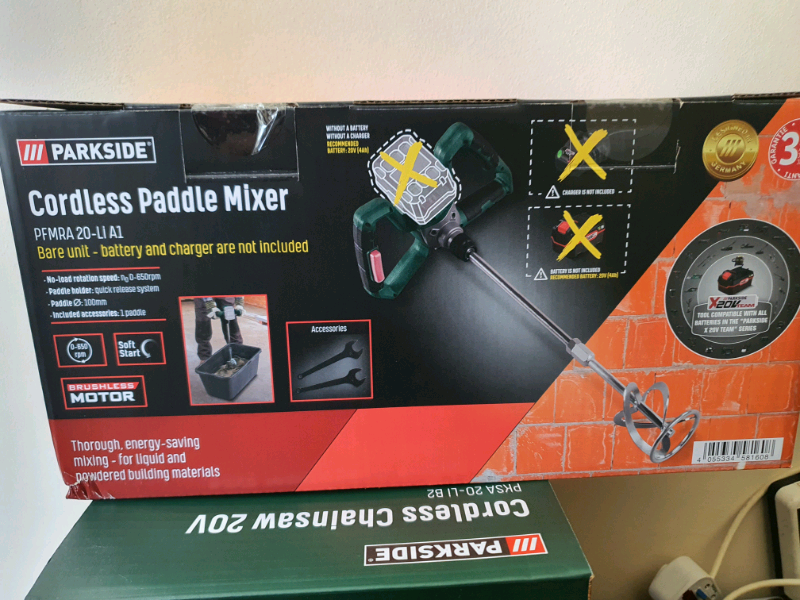
On the other hand, cordless mixers are lightweight and portable, allowing for quick and easy setup and use. They’re perfect for smaller jobs or those where you’re limited in access to an outlet. Buy a parkside paddle mixer, one of the best cordless grout mixers.
Material:
When choosing a paddle mixer, it’s important to consider the material the paddle is made of. The material used will impact its strength and durability, as well as how easy it is to clean after use.
Most paddle mixers are made from either steel or aluminum. Steel is the stronger material, making it more durable for heavy-duty tasks such as mixing large batches of paint plaster grout.
However, steel paddles can rust over time, so if you’re using it outdoors in damp conditions, you may need to choose an aluminum paddle instead.
No matter which material you choose for your paddle mixer, make sure it’s sturdy and up to the task at hand. Consider how much material you plan to mix and how often you’ll be using it in order to make the best decision for your needs.
Speed:
When choosing a paddle mixer for liquid & powdered building materials, speed is an important consideration. You want to be sure the mixer you select is fast enough to meet your needs, but not so fast that it produces too much splash and splatter.
The speed of the paddle mixer should match the job you’re trying to do. Generally, a faster speed is more suitable for larger jobs and a slower speed is better for smaller ones.
If the paddle mixer has variable speeds, then you can adjust it according to the type of material you’re mixing and the amount of work you need to do.
For instance- park side paddle mixer 6 rotational speed setting with electronic speed control system allowing you to adjust the speed according to your needs.
Conclusion:
Choosing the right paddle mixer for your concrete needs can be a daunting task, but with a little bit of knowledge and research you can easily find the perfect fit for your project. If you’re looking for the best mixer, consider buying a park side paddle mixer, one of the most energy-saving and affordable grout mixers.